
Overview
The region of outer space near the Earth is changing. 65 years after the launch of the first artificial satellite, many thousands of satellites orbit our planet. Many more pieces of “space debris” or “space junk” also surround Earth as a result of this activity. The space around our planet is growing ever more crowded, risking future catastrophes. This is the result of a new age in the use of outer space that began in 2019. Private commercial space companies began launching massive groups of satellites, referred to as large satellite constellations. These are also colloquially known as “megaconstellations”. Although strictly speaking none of them reaches a million satellites, this term often refers to a group of satellites numbering from hundreds to tens of thousands. They are designed, launched and operated as a group for a common purpose, such as delivering broadband Internet access. Companies use large numbers of satellites in low orbits to ensure uniform coverage of the Earth and high network speed.
This new era of commercial space development poses some important challenges to astronomy.

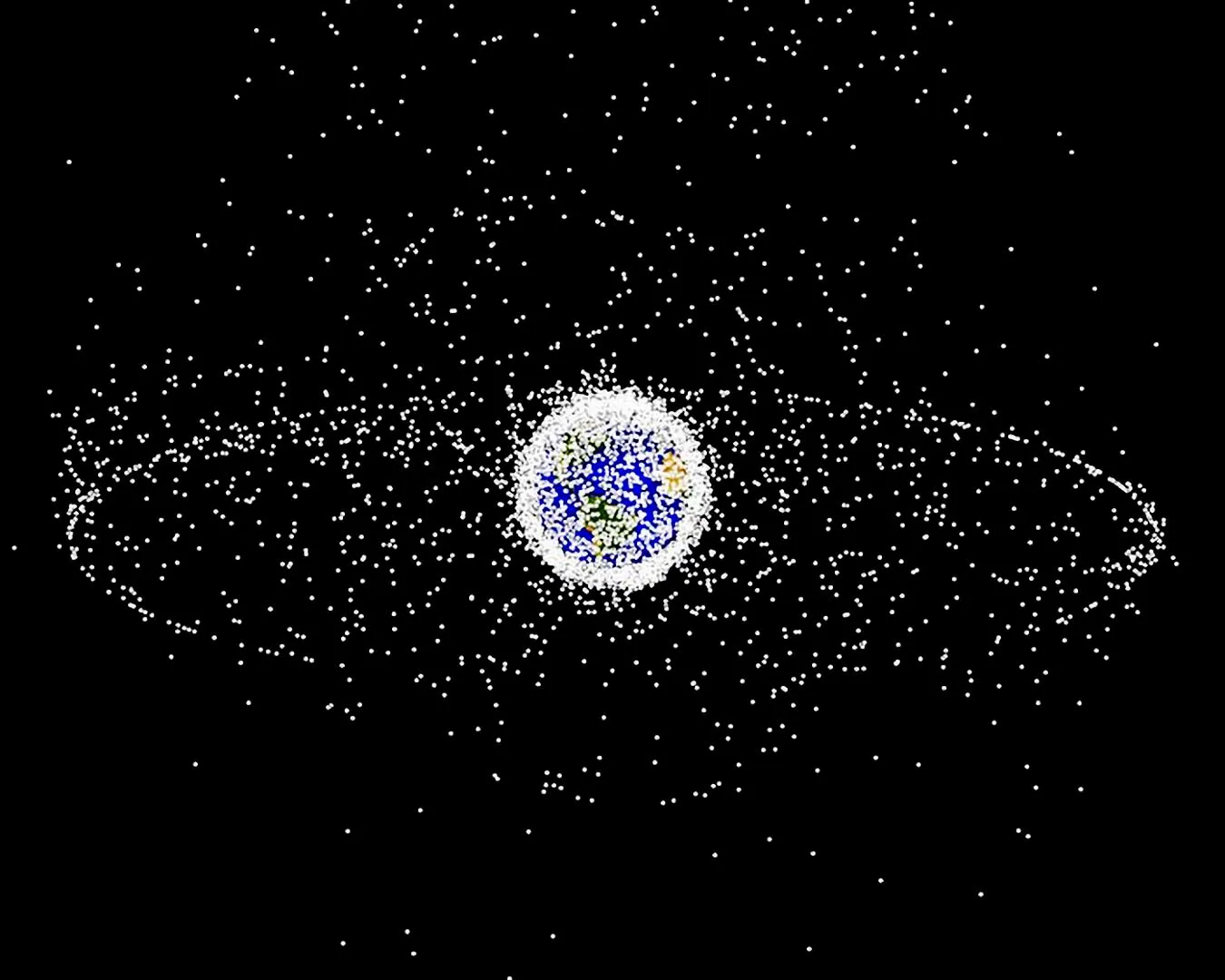
Challenge #1: An increasingly crowded space environment
Since the start of the megaconstellation era, the number of functional satellites has tripled to almost 7000. Space companies have publicly announced plans for the launch of up to 400,000 satellites by 2030. In addition, more than one million debris fragments larger than 1 centimeter may already orbit the Earth. Hostile events, such as destructive antisatellite weapons tests, or accidental collisions or failures threaten to increase these numbers.
The life cycles of satellites also pose other environmental threats. Pollution from launches may add substances to the lower atmosphere related to climate change. Re-entering spacecraft may deposit large quantities of certain metals into the upper atmosphere. And there are potential impacts to wildlife and ecosystems from megaconstellations. For example, adding many new and bright moving objects to the night sky could interfere with migratory species that use the stars to navigate.
Challenge #2: A brightening night sky
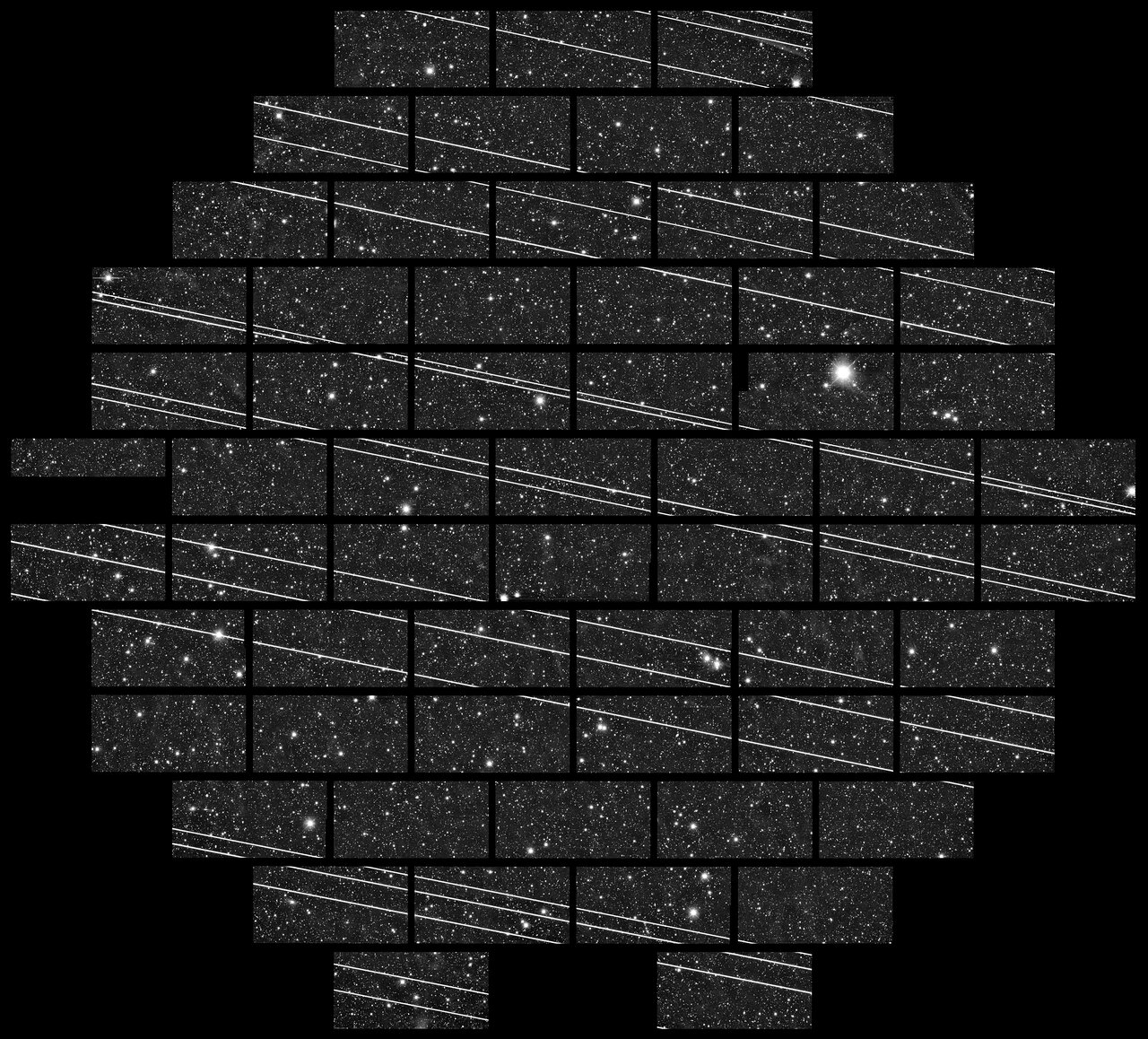
Megaconstellations and debris are altering the appearance of the night sky. When high above the Earth, they reflect sunlight to the night side of the planet, which makes them visible as moving points of light. Swarms of satellites may interfere with the cultural and religious practices of some people. And they can be an unwelcome intrusion for casual stargazers and all who love the tranquility of dark and quiet nights. Astronomical telescopes now often record bright trails of light in photographs. Astronomers may lose data when satellite trails overwhelm the faint cosmic signals they collect. Megaconstellations and debris can raise the brightness of the night sky itself, making it difficult to see faint objects. Radio transmissions from satellites can also overload the sensitive detectors of radio telescopes. These combined effects are harming our ability to make new astronomical discoveries using telescopes on the ground. Not even space telescopes are immune to the problem. Satellite trails are evident in some Hubble Space Telescope images too.

Challenge #3: A new source of radio interference
Satellits can be troublesome to radio telescopes since they transmit signals orders of magnitude stronger than many of the astronomical signals. In other words, satellite transmissions produce an effect similar to pointing a flashlight in one’s eyes in a very dark room. There are plans to increase the number of satellites in Low Earth Orbit (LEO) at altitude of 300-1200 km and orbital periods of 60-90 minutes surpassing 1.4 million.
What AAS is doing
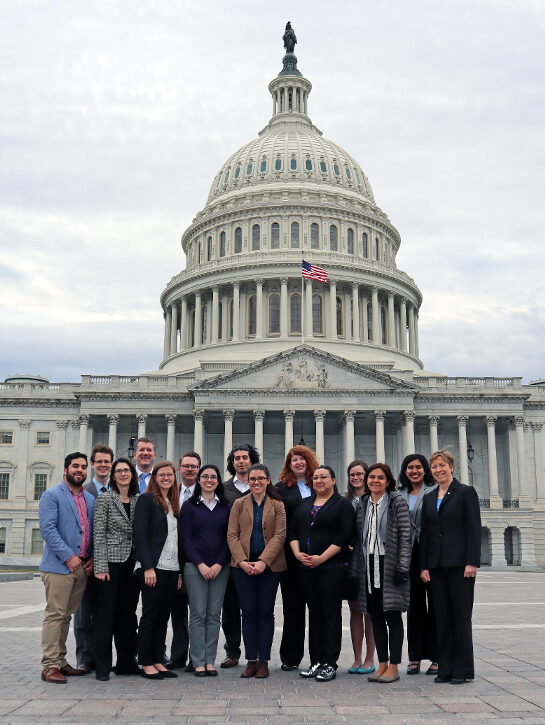
AAS was among the first organizations to issue a position statement on the issue of satellite constellations as they impact astronomy in 2019. Since then, special sessions at AAS meetings have focused on the topic in order to educate AAS members. COMPASSE members have provided briefings for various agencies of the U.S. federal government, engaged in research relating to satellite constellations and astronomy, and provided interviews to interested media. Through its Public Policy office, AAS tracks related federal legislation and agency rulemaking that may affect the regulation of satellite constellations. The subject has also featured prominently in the annual AAS Congressional Visits Day, where AAS members can discuss issues directly with lawmakers and Congressional staff.
Recent actions
- September 2025: AAS comment on Proposed FCC Rule Excluding Satellite Operations from Environmental Review
- August 2025: AAS comment on the proposed European Union Space Act
- August 2025: COMPASSE members’ comment on Canadian government satellite licensing consultation
- May 2025: COMPASSE members’ comment on U.S. Office of Space Commerce Draft ISO Space Traffic Coordination Standard
- January 2025: COMPASSE comments on U.S. export control policy regarding satellite signature reduction

Resources
Learn more about this topic on the following links:
- IAU Centre for the Protection of the Dark and Quiet Sky from Satellite Constellation Interference website
- SATCON1 report (2020)
- SATCON2 Working Group reports (2021)
- Dark & Quiet Skies I report (2021)
- Dark & Quiet Skies II report (2022)
- IAU Symposium 385: Astronomy and Satellite Constellations: Pathways Forward (2023)
"SatCons 101"
Created by our partners at the International Astronomical Centre for the Protection of the Dark and Quiet Sky from Satellite Constellation Interference, SatCons 101 is a series of short videos that help viewers gain a basic factual understanding of large satellite constellations and how they impact both astronomy and the space environment.